
The family summer picnic guide
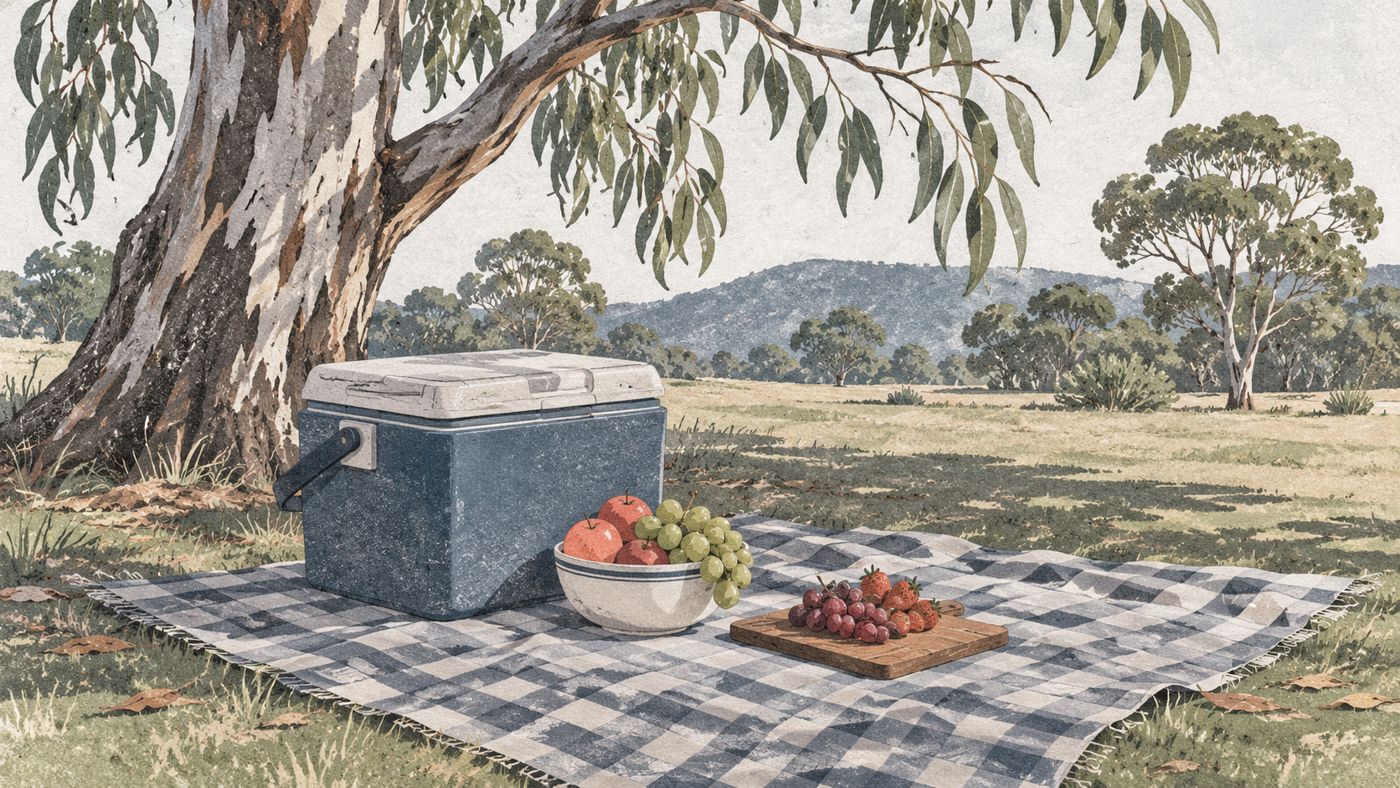
A great family picnic comes down to three things: a spot with shade, food that travels well, and a few simple games to keep everyone happy. This guide walks through each of those, plus the food safety and sun protection details that matter most in an Australian summer. This is general information and not medical advice, so speak with your GP or child health nurse about anything specific to your family.
Picking the spot
Look for a park or beach with shade from trees or a built shelter, and check whether there are toilets, water taps and bins nearby. Shade is one of the five SunSmart steps, but it should be combined with other measures because UV can still reach you by reflection1. Your own sunshade tent or umbrella counts as shade too, and it gives babies somewhere cool to nap.
Timing matters as much as place. Avoid the hottest hours of the day and plan strenuous games for early morning or late in the evening2. A picnic lunch that wraps up before the sun is at full strength is easier on everyone, from toddlers to grandparents.
Sun protection while you eat
Skin cancer is the most commonly diagnosed cancer in Australia, and UV radiation from the sun is its major cause1. Sun protection is recommended whenever UV levels reach 3 or higher, and UV cannot be seen or felt, so check your local level on the free SunSmart app or the Bureau of Meteorology website before you head out1.
The five SunSmart steps work best when you use all of them1:
| Step | What it means at a picnic |
|---|---|
| Slip | Collared long-sleeved shirts that cover as much skin as possible |
| Slop | Sunscreen applied generously at least 20 minutes before you leave |
| Slap | A broad-brimmed, legionnaire or bucket hat for everyone |
| Seek | Trees, shelters or your own shade tent |
| Slide | Close-fitting wraparound sunglasses meeting the Australian Standard |
Caps and visors do not provide enough protection, so pack proper hats1. Apply sunscreen to clean, dry skin at least 20 minutes before going outside, and reapply every two hours or after swimming or excessive sweating1. Cancer Council recommends SPF 50 or SPF50+, broad-spectrum, water-resistant sunscreen1.
Food that travels well
Keep it simple and mostly finger-friendly. Think sandwiches, cut fruit, cheese and crackers, hard-boiled eggs, chopped vegetables with dip, and home-baked slices. A thermos of cold water or frozen water bottles double as ice packs for the esky. On hot days, drink plenty of water even before you feel thirsty, and wear light-coloured loose clothing2.
If your baby is on solids, good picnic options include pureed fruit and vegetables, soft finger foods and iron-rich options such as iron-enriched infant cereal or pureed meat3. Most babies can manage finger foods at 8 months, including soft fruit, eggs and omelette, cheese, boneless soft meat and fish, and cut up bread3. Give babies under 6 months extra breastfeeds or formula feeds during hot weather2.
Food safety and choking prevention
Pack food in a cooler with ice packs and keep it in the shade. Never reheat food that has been reheated before, or that has been sitting at room temperature for more than 2 hours3. Keep raw and cooked foods separate and wash hands before eating, using wipes or a water bottle if there is no tap.
Babies and young children are at highest risk of choking because their airways are soft and narrow and they explore by putting things in their mouths4. Make sure children sit down to eat, cut grapes lengthways and then in half again, remove bones from meat and fish, and cut sausages and remove the skin4. Avoid whole grapes, nuts and popcorn while little ones are eating, and always supervise mealtime4.
If you have a child with a food allergy, common allergens must be listed on Australian food labels, and all carers should read and understand that information5. A child prescribed an adrenaline autoinjector should carry it at all times, including at picnics5.
Games and quiet activities
Pack a ball, a Frisbee, a cricket set or a kite for the open space, and plan water-based cooling games if taps are nearby. For the hot middle of the day, a rug in the shade with quiet activities works well. Our summer colouring packet suits toddlers through to bigger kids, and the summer fill-in-the-blank story is a silly group activity that works while everyone sits still. Storytelling, I spy and a nature hunt for leaves and flowers cost nothing and suit solo parents managing the day alone.
Watching for heat illness
Young children are at higher risk of heatstroke, which is a life-threatening medical emergency where the body overheats to above 40°C and can no longer cool itself2. Warning signs include red, hot or dry skin, nausea, vomiting, thirst, poor coordination, confusion and dizziness2. If someone may have heatstroke, call triple zero (000) and ask for an ambulance, then move them to a cool or shady place and begin cooling them while you wait2. For non-urgent questions, the healthdirect helpline on 1800 022 222 has a registered nurse available 24 hours a day, 7 days a week2.
Packing up
Bring a spare bag for rubbish and a box for leftovers, and leave the spot as you found it. Shake out the rug, round up the hats and sunglasses, and check under the picnic rugs for stray toys and food that little hands dropped. Before you head home, run through our summer picnic essentials checklist so nothing is left behind, and read the ten steps for a safe family summer for more ways to stay safe across the whole season.
Sources
- Be SunSmart, Cancer Council Australia
- healthdirect, healthdirect
- Pregnancy, Birth and Baby, Pregnancy, Birth and Baby
- healthdirect, healthdirect
- healthdirect, healthdirect
We wrote this page from the public sources listed above, checked on 26 November 2026. Check the source for current advice.