
Helping children sleep well on hot summer nights
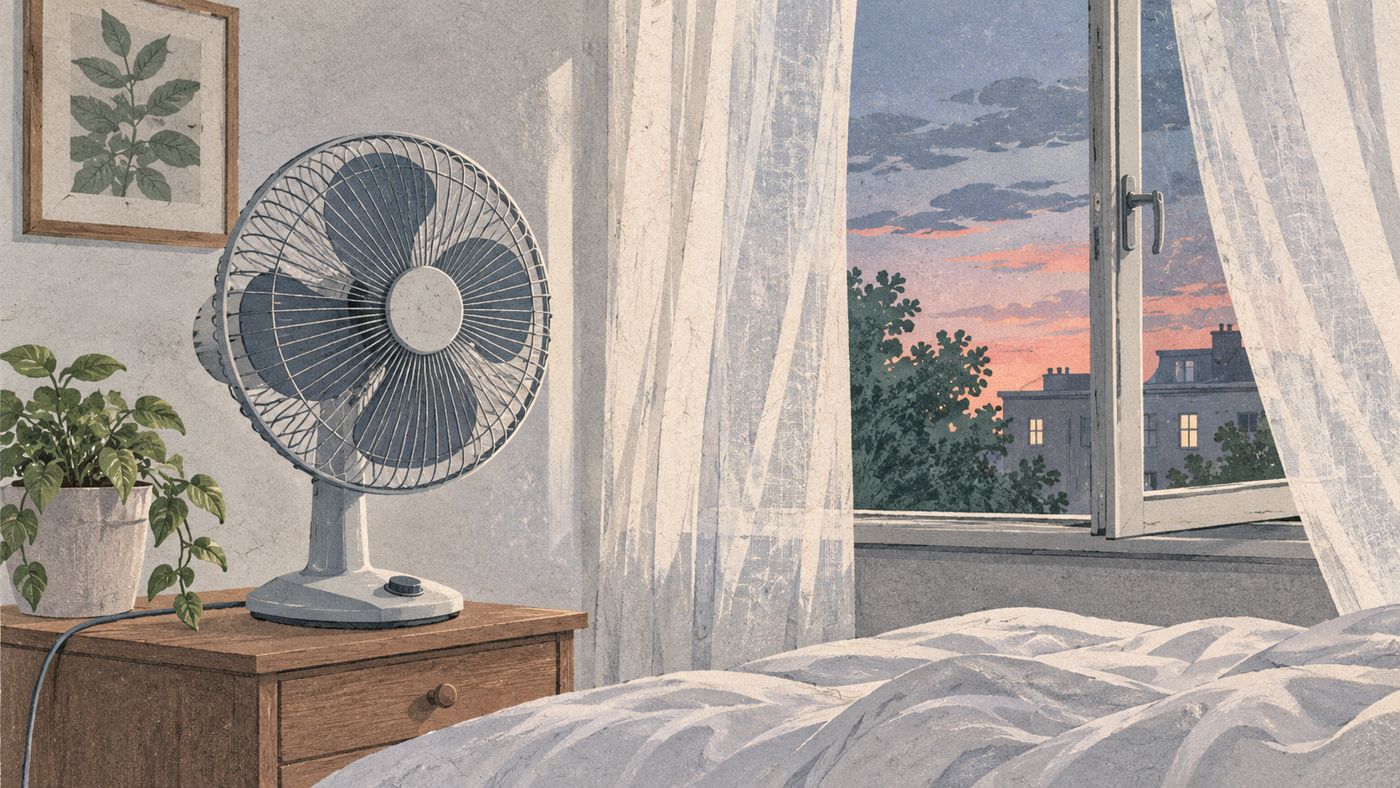
Hot nights, late sunsets and holidays that throw routines out the window: summer can make children's sleep harder for everyone in the house. The good news is that a few practical changes to the room, the bedding and the evening wind-down can make a real difference, and most of them cost nothing.
This is general information only and not medical advice. For anything that worries you about your child's sleep or health, talk to your GP or child health nurse.
Cool the room before you cool the child
If you have air-conditioning at home, set the temperature to less than 26°C on hot days and keep shades and curtains closed during the day to stop the room heating up1. If you do not have air-conditioning, spending time in the late afternoon in a cool public space such as a shopping centre, library or community centre helps children head into bedtime without being already overheated1.
Never leave a child in a parked car, even for a quick errand, as cars heat up dangerously fast1.
Dressing and bedding for babies
Babies control their temperature through their face and head, so always keep their head and face uncovered during sleep, and take off hats or beanies before sleep even in cold weather23. A simple rule of thumb is to dress baby in as many layers as you would wear yourself to be comfortably warm3.
On a hot night, dress baby in the fewest layers you would need to be comfortably warm, and choose the sleeping bag TOG that suits the room. Sleeping bags help keep temperature steady and reduce the risk of bedclothes covering the face, and many carry a Thermal Overall Grade (TOG) rating so you can choose the one that suits the room3. A safe sleeping bag is well fitted across the neck and chest, has baby's arms out and no hood2.
Some cooling methods are never safe for babies. Never sleep baby in a cot with an electric blanket, hot water bottles or wheat bags3. If you use sheets and blankets, keep them lightweight, tuck them in well, pull them up only to baby's chest, and place baby's feet at the end of the cot23. A safe cot meets the mandatory Australian and New Zealand Standard for cots, AS/NZS 2172:2003, with a firm, flat mattress that fits properly2.
Hot weather does not change the basics of safe sleep. Always place baby on their back, keep the cot free of doonas, pillows, bumpers and soft toys, and never let baby sleep in an inclined or propped-up position such as a bouncinette, as the head falling forward can block the airway23. If you are working on sleep patterns generally, our guide to setting up healthy sleep routines for children covers the basics.
Hydration on hot days
Babies under 6 months of age need extra breastfeeds or formula feeds during hot weather1. Offer older children and the whole family plenty of water, even before anyone feels thirsty1. Keep the family well too, because a sick child or sick parent during the holidays makes everything harder, and staying well when your family cannot afford to be sick starts with the simple things.
Long evenings and screens
Daylight saving and bright evenings can trick children's bodies into staying awake. A dark, cool, quiet room helps, and if a night light is needed for a toddler, choose a red one4. Blackout curtains or a temporary window cover can dim the room for bedtime, but keep the cot well away from curtains, cords and anything hanging.
Screens make the light problem worse. Avoid electronic devices for at least 1 to 2 hours before a toddler's bedtime, as blue light can disrupt sleep4, and turn off computers, phones and televisions one hour before bedtime for older children5. If you want to understand the eye effects in more depth, read up on screens, blue light and your child's eyes.
Keeping holiday routines from falling apart
Late dinners, travel and visitors mean bedtimes drift. Aim for the same bedtime even on weekends, and if your child resists, be firm and consistent but do not punish them5. Watch for tired signs in younger children, such as frowning, yawning, grizzling, staring, jerky movements, arching the back, clenching fists and rubbing eyes, and put them down as soon as you notice them6.
Before sleep, check baby has had a feed and a clean nappy and is not too hot or cold6. It is fine to breastfeed or cuddle a young baby to sleep for as long as needed, and there is no evidence this creates bad habits6.
Dads, partners, grandparents and anyone staying over the holidays can all run the same wind-down, which is a relief for solo parents and anyone doing every bedtime alone. For more ways to keep the whole household safe and sane over summer, see our ten steps for a safe family summer.
When to get help
See a doctor if your child is sleeping too much or too little, has difficulty falling asleep, wakes often at night, or behaves in a way that concerns you while asleep5. For toddlers, problems worth raising include waking more than 3 times each night, staying awake 20 minutes after waking, or struggling to settle within 20 minutes4.
Know the signs of heatstroke too, because young children are at higher risk. If someone may have heatstroke, call triple zero (000) and ask for an ambulance, move them to a cool or shady place, remove extra clothing and begin cooling them while you wait1. If you are unsure and it is not an emergency, the healthdirect helpline on 1800 022 222 has a registered nurse available 24 hours a day, 7 days a week1.
One last point worth holding onto: if your baby will not settle and you feel frustrated or angry, put them safely in their cot and leave the room while you calm down. Shaking a baby is never okay and can cause brain damage and death, so taking a short break is always the safer choice6.
Sources
- healthdirect, healthdirect
- 6 Safe Sleep Recommendations For Babies, Red Nose Australia
- Safe sleep for babies, Pregnancy, Birth and Baby
- Pregnancy, Birth and Baby, Pregnancy, Birth and Baby
- healthdirect, healthdirect
- Getting your baby to sleep, Pregnancy, Birth and Baby
We wrote this page from the public sources listed above, checked on 26 November 2026. Check the source for current advice.