
Why your family needs a sun protection wardrobe
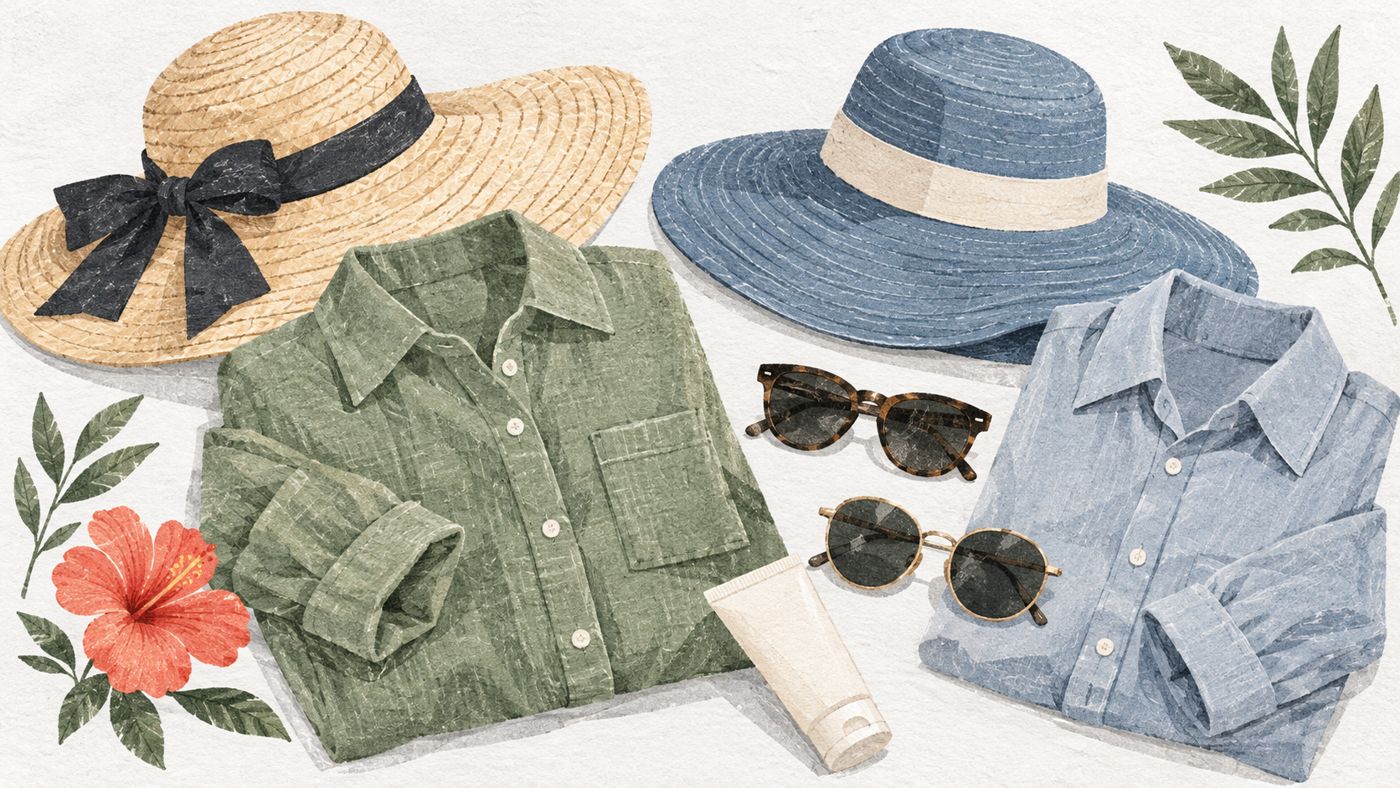
A family sun protection wardrobe is about more than a tube of sunscreen in the beach bag. Clothing, hats, sunglasses and shade all come first, with sunscreen as the final layer rather than the whole plan. Here is how to put the kit together, what to look for on an Australian label, and how to keep it working through a long day outside.
This is general information and not medical advice. If you have questions about your child's skin, vitamin D or reactions to sunscreen, talk to your GP or child health nurse.
Why the wardrobe approach works
UV radiation from the sun is the major cause of skin cancer, and it also causes sunburn, tanning, premature ageing and eye damage1. Skin cancer is the most commonly diagnosed cancer in Australia, which has one of the highest rates of skin cancer in the world1.
Sunscreen alone cannot completely protect against UV radiation, so it should be used alongside the other measures1,2. Think of it as a wardrobe: several items that each do a different job.
When you actually need it
Sun protection is recommended whenever UV levels reach 3 or higher, and it is not needed below 3 unless you are outside for a long time or near reflective surfaces such as snow1. UV cannot be seen or felt, so check your local level on the free SunSmart app or the Bureau of Meteorology website rather than relying on temperature or cloud cover1. healthdirect advises applying sunscreen on any day when the UV index is forecast to reach 3 or more at any point, even if it is cloudy2.
Clothing: slip it on
Choose clothing that covers as much skin as possible, such as collared long-sleeved shirts; some garments carry a UPF rating that guarantees how much UV protection the fabric provides1. For a busy family wardrobe, that means:
- Long-sleeved, collared tops for kindy days and park trips, in a fabric with a tight weave
- Longer shorts or pants rather than short shorts when the UV is up
- Swim shirts or rashies for the pool and beach, kept in the swimming bag so nobody forgets
- A spare set in the car for whichever parent or carer is caught out
Hats: slap one on
Broad-brimmed, legionnaire or bucket styles shade the face, nose, neck and ears, while caps and visors do not provide enough protection1. Bucket hats are usually the easiest sell to kids, and legionnaire styles with the flap at the back suit pram walks. Buy a hat that fits now, not one to grow into, and check that everyone in the household, including dads and grandparents on school pickup duty, has their own.
Shade: seek it out
Use shade from trees, built structures or your own sunshade tent, but combine it with other measures because UV can still reach you by reflection1. A sunshade tent is worth keeping with the beach gear, and picnic spots under solid roofing beat open lawn in the middle of the day.
Sunglasses: slide them on
Sunglasses plus a broad-brimmed hat together can reduce UV exposure to the eyes by up to 98%; choose close-fitting wraparound sunglasses meeting the Australian Standard AS/NSZ 1067 and wear them outside during daylight hours1. Kids' sunglasses should be close-fitting and meet the Australian Standard.
Sunscreen: slop it on
Cancer Council recommends SPF 50 or SPF50+, broad-spectrum, water-resistant sunscreen, while healthdirect advises SPF 30 or above, broad spectrum and waterproof1,2.
Apply a generous amount to clean, dry skin at least 20 minutes before going outside, and reapply every two hours or after swimming or excessive sweating1. An average-sized adult needs roughly a teaspoon for the head and neck, each limb, and the front and back of the body, which is about seven teaspoons (35mL) for a full body application1. healthdirect advises around 5 mL (approximately 1 teaspoon) for each exposed part of the body2.
Set a phone reminder for reapplication at the two-hour mark, and put the reapply-after-swimming rule in words your kids can repeat back to you.
Reading an Australian label
Sunscreen labels in Australia and New Zealand must state the SPF number and which rays they protect against, and any sunscreen legally sold here must be listed on the Australian Register of Therapeutic Goods2. That register is a handy check if you are buying online from an unfamiliar shop.
A few label pointers worth knowing:
- Chemical sunscreens are light creams that absorb and reflect UV, while physical sunscreens contain minerals such as zinc oxide or titanium oxide, sit thicker on the skin and leave a milky-white appearance2.
- Spray sunscreens are not recommended because it is hard to apply enough to achieve good UV protection2.
- Makeup should not be used in place of sunscreen, as cosmetics do not undergo the same testing for sale in Australia and may not give reliable sun protection2.
- Reactions to sunscreen are rare and are usually an allergy to an ingredient; a doctor or pharmacist can help find one that is safe to use2.
The free SunSmart app provides sun protection alerts, UV data, a 7-day weather forecast and a sunscreen calculator2, which takes the guesswork out of how much to use.
Vitamin D, briefly
Australians should not deliberately expose themselves to harmful UV for vitamin D, because prolonged sun exposure does not raise vitamin D further but does raise skin cancer risk1. When UV levels are 3 or higher, most Australians get enough vitamin D from just a few minutes of sun exposure during everyday tasks1.
Keep an eye on skin
Check skin regularly for new spots or changes in the shape, colour or size of existing spots, and see a doctor promptly about anything unusual, as most skin cancers can be successfully treated if found early1. See your doctor for skin changes such as crusty sores that are not healing, small lumps that are pale or pearly in colour, or freckles, moles or spots that have changed in size, colour, shape or thickness2. Make skin checks a regular habit for every adult in the household. Once the wardrobe is stocked and the habit is set, sun protection stops being a daily negotiation and becomes just what your family does before heading out the door.
If skin care or general family routines are on your list as well, our parent's guide to children's skin care covers the everyday basics, and if the long summer evenings are disrupting bedtime, better sleep for the whole family has practical ideas. Expecting again and struggling with mornings? Our eating tips for morning sickness may help.
Sources
- Be SunSmart, Cancer Council Australia
- healthdirect, healthdirect
We wrote this page from the public sources listed above, checked on 26 November 2026. Check the source for current advice.