
Handwashing steps and rewards chart
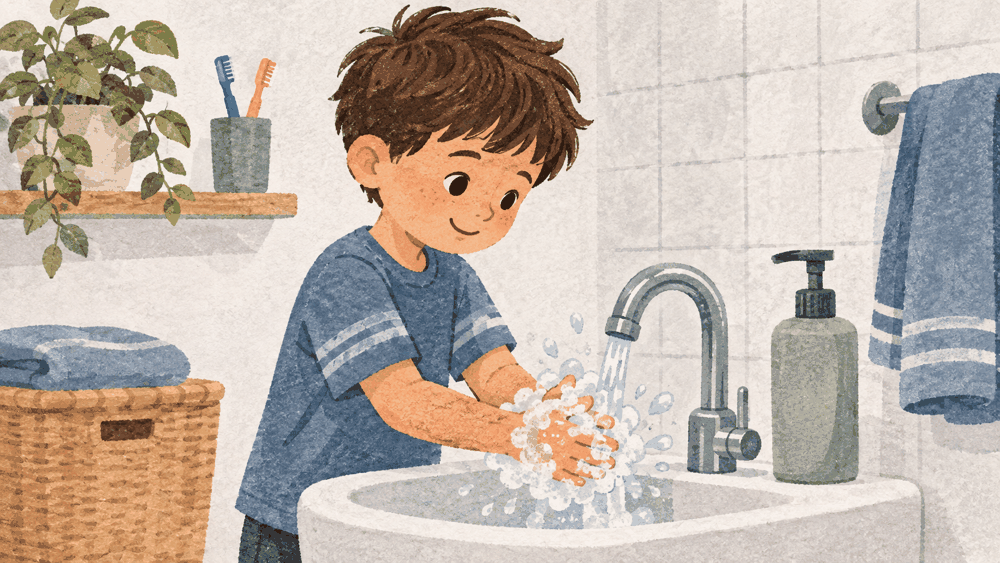
Hand washing is one of the simplest ways to stop colds, flu, COVID-19 and gastro spreading through your family, and it matters most when you are caring for babies, older people or anyone unwell1. This printable gives you the steps, a chart to stick near the sink, and tips for little ones who cannot yet reach the basin. It is general information, not medical advice.
The hand washing steps
Teach these steps in the same order every time so they become automatic:
- Turn on warm, soapy water
- Rub hands together for at least 20 seconds
- Cover every surface, including between the fingers
- Rinse all the soap off
- Dry hands thoroughly
Wash with warm, soapy water whenever hands look visibly dirty, and rub them together for at least 20 seconds while covering all surfaces including between the fingers1. Normal soap is just as good as antibacterial soap, so there is no need for anything fancy1.
When hands need a wash
The tricky part for kids is remembering when. Cover these key moments:
- After the toilet
- After changing a nappy
- Before preparing or eating food
- After touching raw meat
- After blowing a nose
- Before breastfeeding or feeding a child
- When holding a sick child
These are the key times to wash hands, so tick them off on the chart below1.
Handwashing rewards chart
Print this chart and let your child add a sticker or colour in a box each time they wash without being asked. Aim for a small reward when a row is full.
| Mon | Tue | Wed | Thu | Fri | Sat | Sun |
|---|---|---|---|---|---|---|
| ☐ | ☐ | ☐ | ☐ | ☐ | ☐ | ☐ |
| ☐ | ☐ | ☐ | ☐ | ☐ | ☐ | ☐ |
| ☐ | ☐ | ☐ | ☐ | ☐ | ☐ | ☐ |
| ☐ | ☐ | ☐ | ☐ | ☐ | ☐ | ☐ |
Hand sanitiser and little hands
Sanitiser only works when hands have no visible dirt; use about half a teaspoon and keep rubbing until hands are dry, which takes about 20 to 30 seconds1. Alcohol-based sanitiser can be poisonous if swallowed, so store it out of reach, supervise children using it, and avoid imported products that may contain toxic ingredients such as methanol1. If you are worried about a poisoning, the 24-hour Poisons Information Centre is on 13 11 261.
If your child is too young to stand at a hand basin, wash their hands with disposable wipes or a wet soapy cloth, then rinse off all the soap and dry their hands thoroughly1.
Good habits alongside hand washing
Remind children to cough or sneeze into a tissue or their elbow rather than their hands, throw used tissues away straight away, and keep sick kids at home2. If your little one enjoys earning stickers for clean hands, a toothbrushing rewards chart for children works the same way, and a how to brush your teeth poster for children can go up beside the chart in the bathroom.
For more whole-family routines, have a look at our ten steps for a safe family summer, and if you are deep in sleep deprivation with a new baby, our eight steps towards better baby sleep might be the next chart on your fridge.
Sources
- healthdirect, healthdirect
- healthdirect, healthdirect
We wrote this page from the public sources listed above, checked on 26 November 2026. Check the source for current advice.