
Is your child overscheduled?
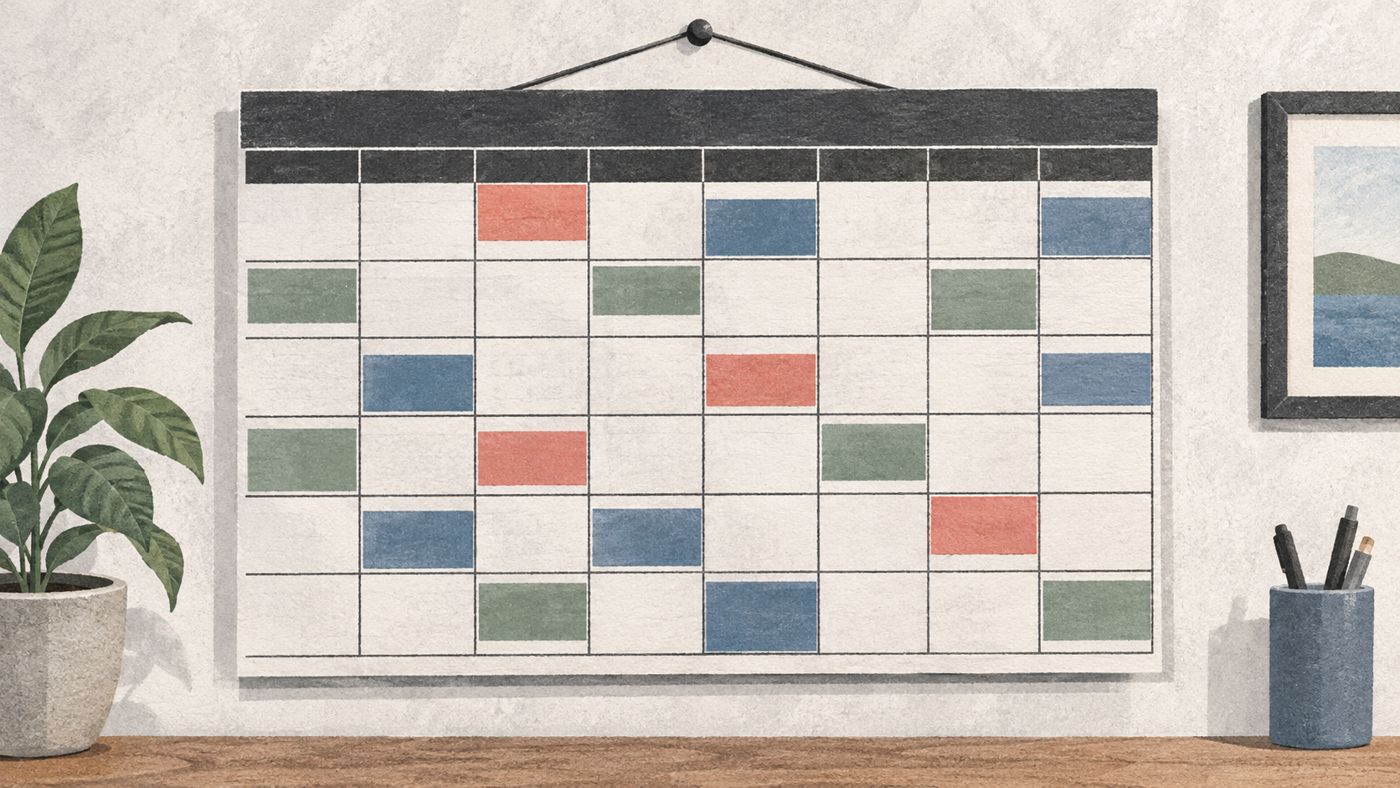
If your child is tired, teary at drop-off or constantly asking to stay home, they may simply have too much on. Overscheduling creeps up quietly: one activity here, a birthday party there, and suddenly every afternoon has somewhere to be. The good news is that a busy week can be pared back gently, without your child missing out entirely.
This article is general information, not medical advice, so talk to a GP or child health nurse if you are worried about your child's health or wellbeing.
Signs your child might be too busy
Every child is different, so look for changes from what is normal for yours rather than one set of symptoms. Things worth watching for include:
- grizzling, tears or clinginess before activities that they used to enjoy
- falling asleep in the car on short trips, or struggling to wake on mornings
- complaints of tummy aches or headaches with no clear cause
- forgetting things, losing gear or rushing homework
- little or no time for unstructured play during the week
- your own stress levels rising as you juggle drop-offs and pick-ups
Dads, carers and solo parents often carry the logistics alone, so your own fatigue is a legitimate signal too, not just your child's.
Why free time matters
Unstructured time is not wasted time. Children use free play to process the day, practise problem-solving, negotiate with siblings and friends, and simply recover. Children behave better when they get enough sleep, eat healthily, have enough daily physical activity and follow a predictable routine, and a crammed schedule can chip away at all of those at once1.
Emotional development is built through slow, ordinary moments, such as chatting in the car, pottering in the backyard or colouring at the table. Strong emotional development supports resilience, confidence, good relationships and persistence with hard tasks2. Those moments rarely fit around four activities a week.
How much rest children actually need
Sleep is the first casualty of an overscheduled child, and tiredness often looks like naughtiness. Children aged 3 to 5 need 10 to 13 hours including naps, children aged 6 to 12 need 9 to 11 hours, and teenagers need 8 to 10 hours3.
If a late activity pushes bedtime back night after night, something in the schedule has to give. Screens also play a part: turn off computers, phones and televisions one hour before bedtime, as screen light can stimulate the brain and make it harder to fall asleep3. If sleep problems persist, discuss them with your doctor or child and maternal health nurse2.
Trimming the schedule without the guilt
You do not need to cancel everything at once. Try a gradual approach:
- Map the week first. Write down every fixed commitment, including school, care and travel time, so the reality is visible.
- Ask your child. Even kindy-age children can say what they love and what they would happily drop.
- Keep one physical activity and one interest. This protects friendships and fitness while cutting the load.
- Protect two free afternoons. Mark them in like appointments so they do not get filled.
- Expect a transition period. Some children miss an activity for a couple of weeks before settling into slower afternoons.
If behaviour has become a real battleground, a lighter week often helps on its own. Parents are their child's most important role model, and looking after yourself gives you the energy and patience to manage behaviour1.
Making free time actually free
Free time does not need planning or equipment. A sandpit, a box of dress-ups, chalk on the driveway or a pile of picture books is enough. Reading together and drawing are useful ways to teach children about emotions and build empathy2.
A predictable routine around the free parts of the day helps too. Children behave better when they live in a safe and interesting environment and follow a predictable routine1, so keep mealtimes and bedtimes steady even when afternoons are loose.
When to get extra support
A quieter week will not fix everything on its own. See a child health nurse or GP if your child's behaviours are severe compared with peers, do not respond to your discipline attempts, or significantly disrupt family life, as these professionals can refer you to a paediatrician or child psychologist1.
If you would like structured help with family routines and behaviour, Triple P, the Positive Parenting Program, offers practical strategies for building family relationships and managing children's behaviour, with options for parents of children from birth to 16 years4. For working out which course suits you, there is a guide at triplep-parenting.net.au4.
Practical tools for the week ahead
To rebuild the calendar from scratch, try time blocking for parents, with a printable chart so the whole family can see where the gaps fall. If money worries are part of what keeps everyone busy, the tips in five money tips for a household income shock can help you decide which paid activities genuinely earn their spot. And if your little one is in a stage where planned activities are thin on the ground, helping your baby socialise when contact is limited has low-key ideas that work at home.
One protected afternoon of pottering is not a lost opportunity, it is where your child catches their breath.
Sources
- Encouraging good behaviour in toddlers, Pregnancy, Birth and Baby
- Helping your child deal with their emotions, Pregnancy, Birth and Baby
- healthdirect, healthdirect
- Triple P, healthdirect
We wrote this page from the public sources listed above, checked on 26 November 2026. Check the source for current advice.